2-Way vs 3-Way Component Speakers: When the Extra Driver Is Worth It
A dedicated midrange can be a real upgrade. It is not automatically a better system.
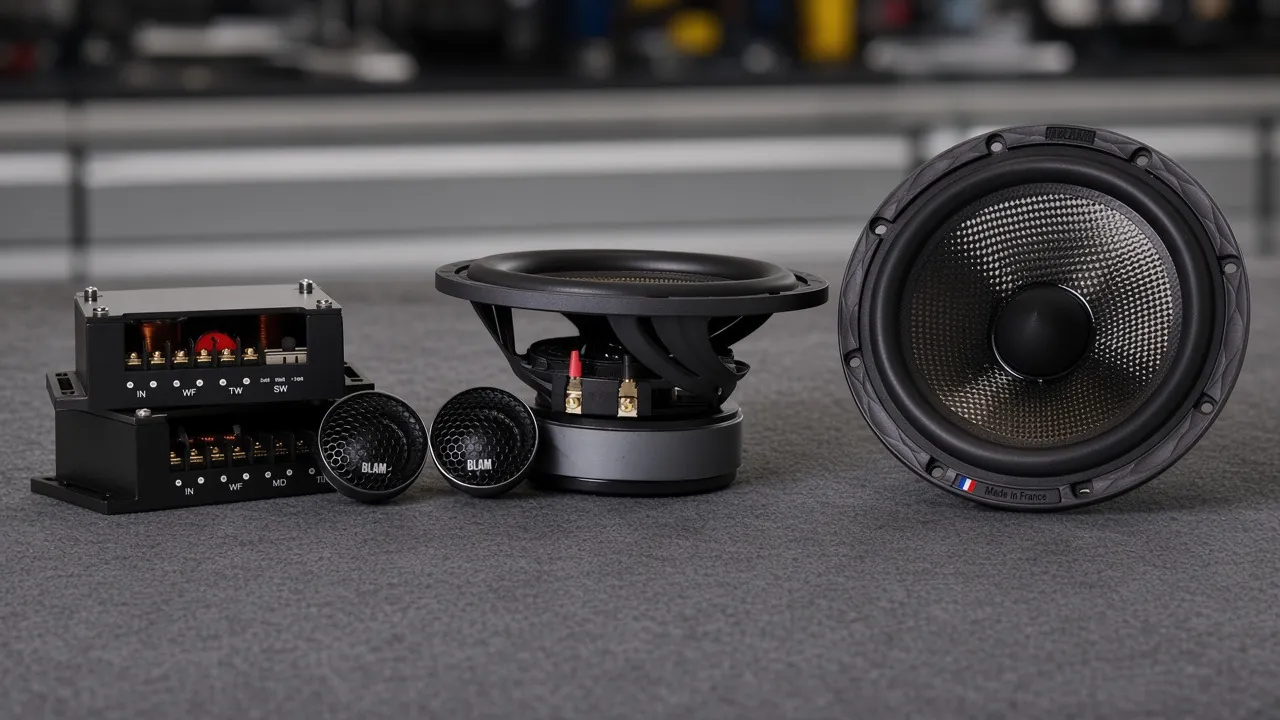
Dealers and enthusiasts ask this all the time: is the extra midrange worth it, or will a good 2-way do the job? A well-tuned 2-way can sound excellent. A 3-way can go further, but only if the midrange has a decent place to live and you have a DSP with enough channels to run it actively. More drivers without those two things is just more complexity.
What a 2-way and a 3-way actually are
A 2-way component set is a woofer and a tweeter. In the BLAM KIT 165 S100, that is two 165 mm woofers and two 25 mm T25S soft-dome tweeters, plus a crossover. The official page lists those woofers at 250 W maximum and 125 W nominal, 50 Hz to 5 kHz, 2 Ω.
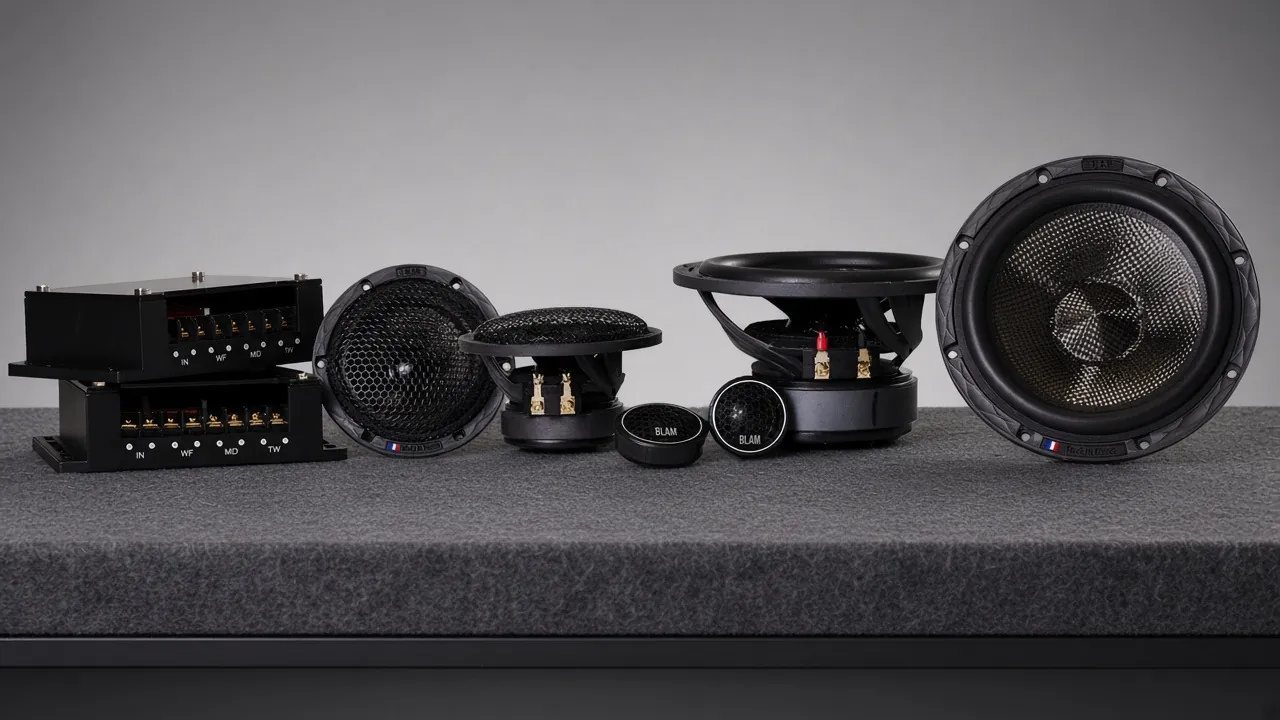
A 3-way adds a dedicated midrange. The BLAM KIT 165 S300 keeps 165 mm woofers with the same 50 Hz to 5 kHz range, 2 Ω impedance, and 125 W nominal rating, then adds S 3.55 midrange drivers (200 Hz to 27 kHz, 3 Ω) and 20 mm T20HR tweeters (1.5 kHz to 40 kHz, 4 Ω). The midrange takes the vocal range out of the lower door — one of the worst places in a car for that part of the music.
Why a 3-way usually needs an active DSP
You can run a 3-way on the kit crossover. In a car, the payoff comes when each driver gets its own amplifier channel, with crossovers, levels, and time alignment set in a DSP. That is an active 3-way: six channels for the front stage alone.
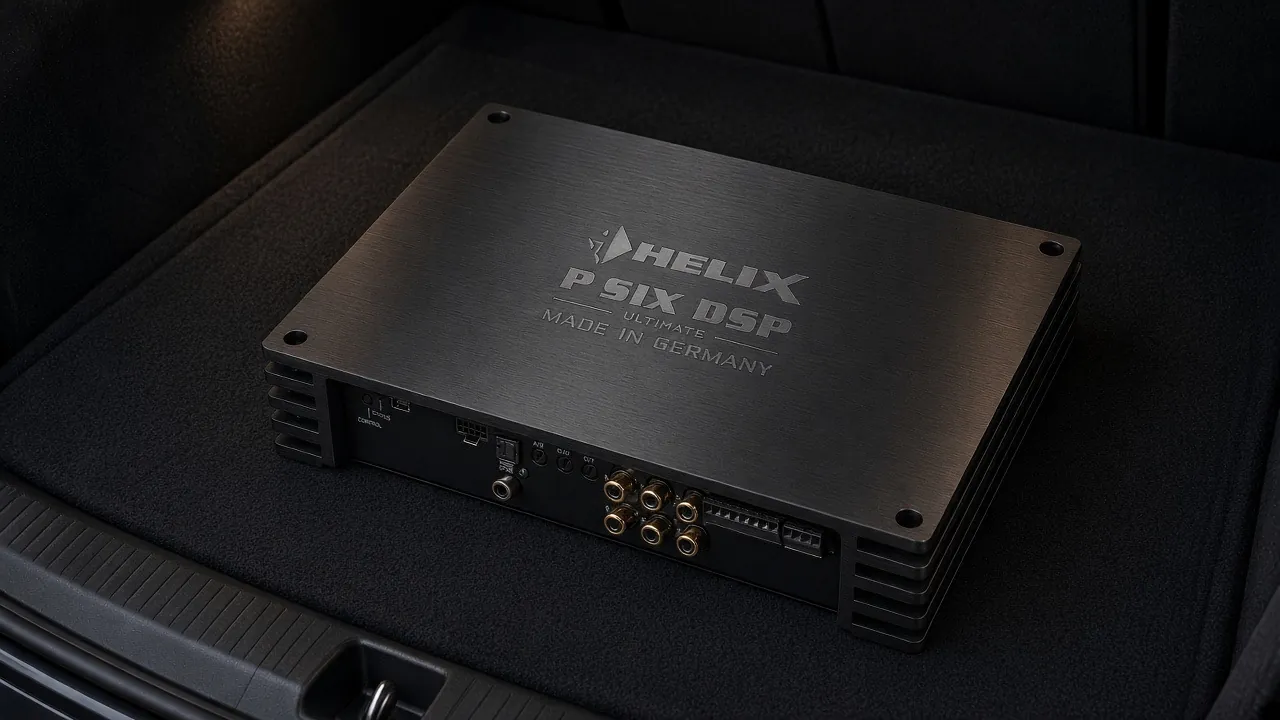
The HELIX P SIX DSP ULTIMATE is a 6-channel amplifier with an integrated 12-channel DSP, six speaker outputs, and four RCA outputs — enough for an active 3-way front stage, with processed outputs left for a subwoofer amplifier. If you also want amplified rear fill, the HELIX NEXT V EIGHT DSP ULTIMATE is an 8-channel amplifier with a 14-channel DSP, eight speaker outputs, and six RCA outputs.
Without that control, the extra midrange often fights the door woofer and the tweeter instead of filling the range between them. A DSP lets you set the handoff and time-align drivers that sit in very different places in the car. Power matching still matters: the S100 and S300 woofers are 2 Ω, and the S300 midrange and tweeter are 3 Ω and 4 Ω.
When a 2-way is the right call
If the car has no good midrange location — no dash pod, no clean A-pillar path — a quality 2-way is the better spend. Treat the doors so the 165 mm midbass can actually work. Sound deadening does more for a door woofer than an extra driver in a bad spot will.
If you already have a place for a midrange and a processor is in the plan, the 3-way is worth it. The midrange can sit closer to ear height and cover the range a door woofer should not. You can still keep the factory radio when that is the right call for the vehicle. The front-stage layout is a separate decision.
The Bottom Line
Start with the car, not the catalog. A tuned BLAM KIT 165 S100 is a complete, honest 2-way front stage. Step up to the KIT 165 S300 when you can give the midrange a real home and run it actively on a HELIX DSP with enough channels. The extra driver is worth it then. It is not worth it as a name on the box.